Wall of Shame
Why do food companies use their best ideas to market the foods that are the worst for kids? They say they care about children’s health, yet they spend billions on campaigns like these. If you have examples of food campaigns that companies should abandon in favor of healthier products, send them to gehlert@bmsg.org.
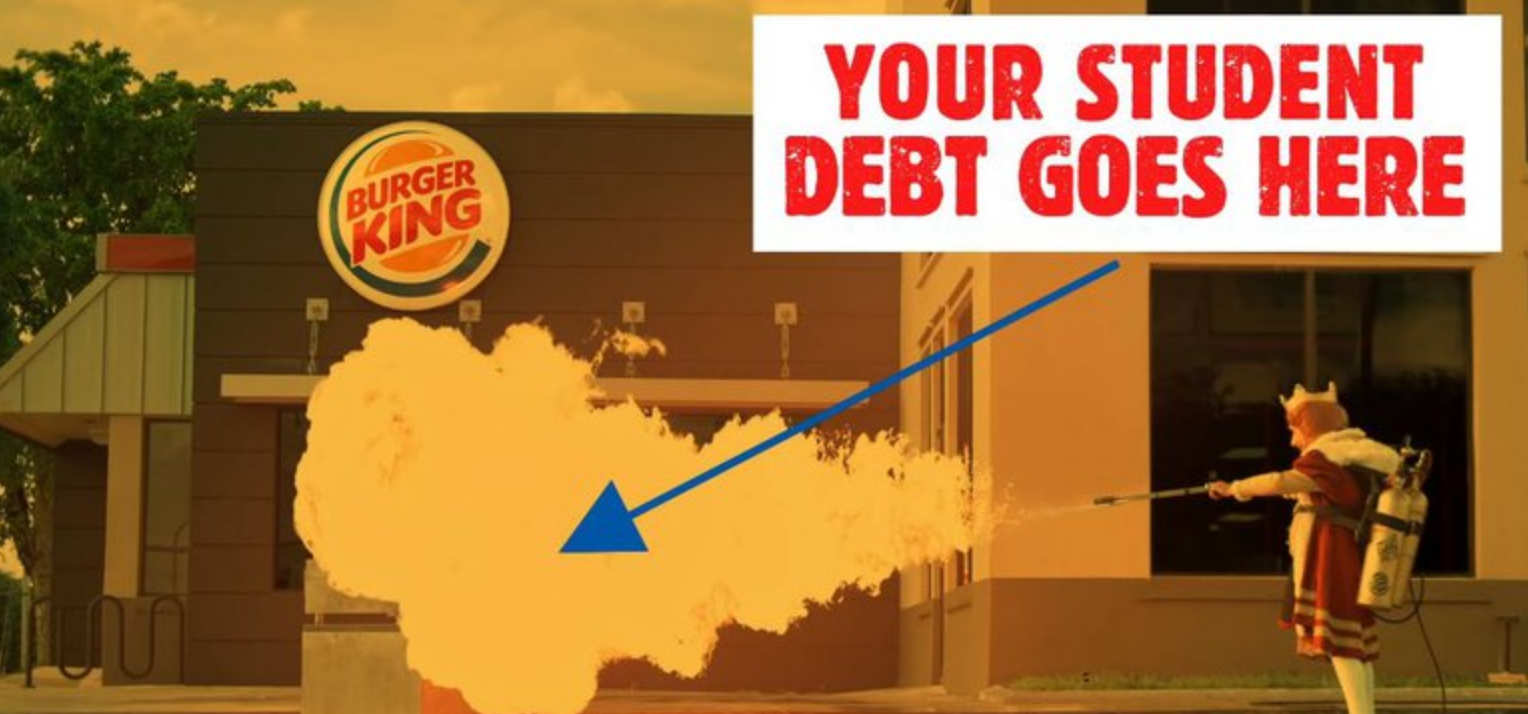
Burger King hosts ‘Whopper Loans’ contest to drive app orders
Using graduation — and recent news coverage of education debt — as a hook, Burger King has created a sweepstakes contest that customers can enter for a chance to pay down their student loans. The largely youth-targeted contest, which includes weekly drawings and offers a grand prize of $100,000, was created to increase downloads of the BK app, which is an integral part of the chain’s marketing strategy.

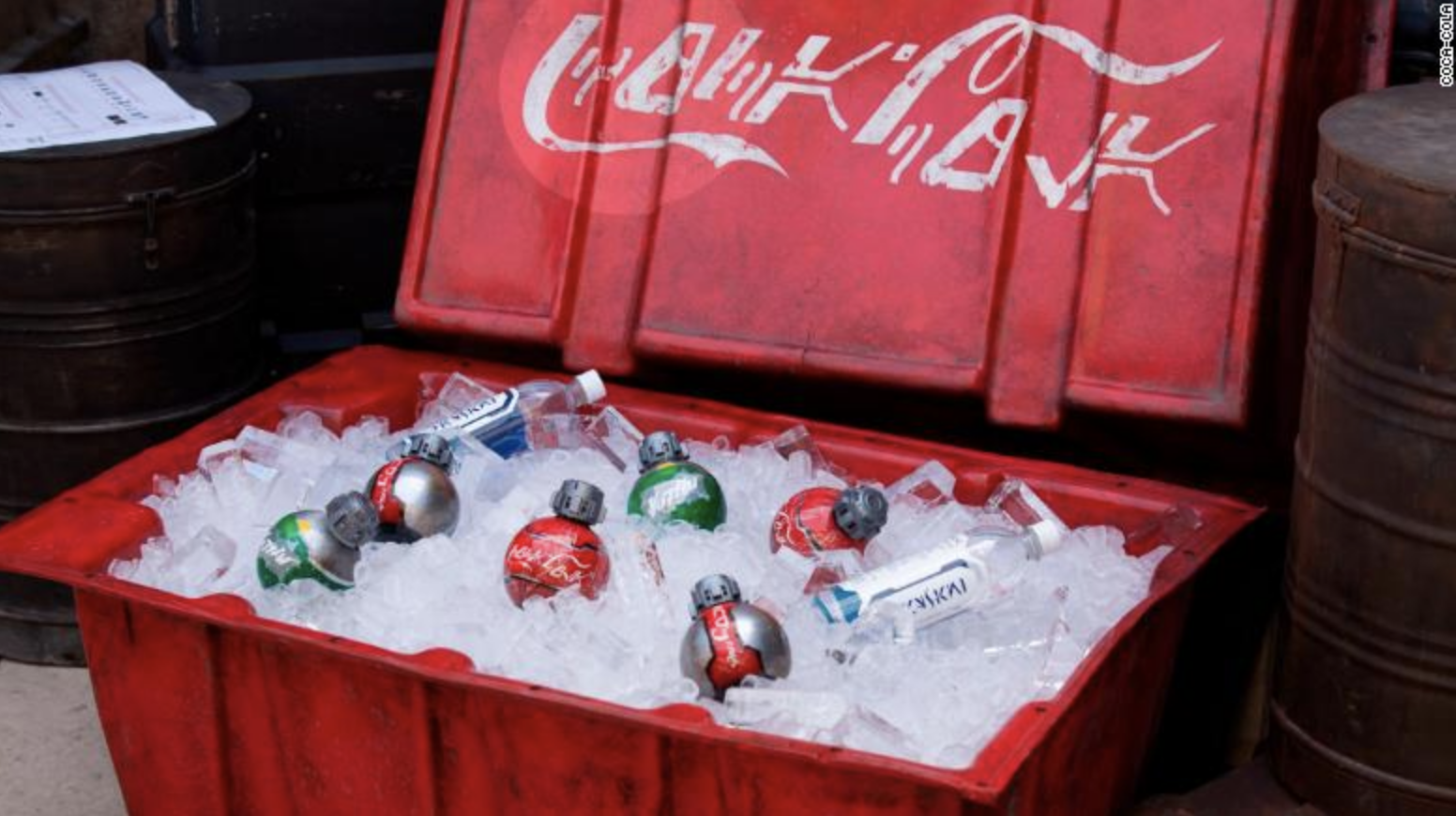
Coke & Disney’s latest collaboration to hook young people on liquid candy
Coca-Cola is partnering with Disney Parks & Resorts to bring custom bottles of Coca-Cola, Diet Coke, Sprite, and Dasani to Disney’s new “Star Wars” land, Galaxy’s Edge. According to reporting from CNN, the bottles will “forgo the familiar look of Coke products for something that fits right into the storyline of Galaxy’s Edge.”
The Coke partnership is just another aspect of the fully immersive experience that Galaxy’s Edge aims to create when it opens on May 31 in California and August 29 in Florida. While Star Wars appeals to audiences of all ages, the partnership with Disney suggests a specific focus on targeting the youth demographic.
Kellogg’s turns cereal boxes into entertainment screens
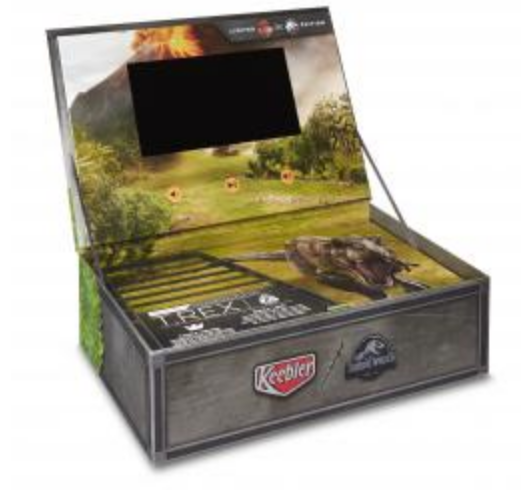
Limited-edition Keebler Fudge Stripes box.
Credit: Kellogg’s
In advance of the June 22 release of “Jurassic World,” Kellogg’s is selling limited-edition boxes of Frosted Flakes cereal and Keebler Fudge Stripes for — wait for it — $24.99 a box. According to Jessica Wohl at AdAge, “each box has a screen inside that plays more than five minutes of apparently ‘explosive content’ (that’s Kellogg’s wording, not ours).”
Other Universal Picture tie-ins for “Jurassic World” include limited-time promotional packaging; lots of Kellogg’s products offering chances to win free movie tickets; and movie-themed Popsicle molds inside select cereal packages. See more coverage from AdAge.
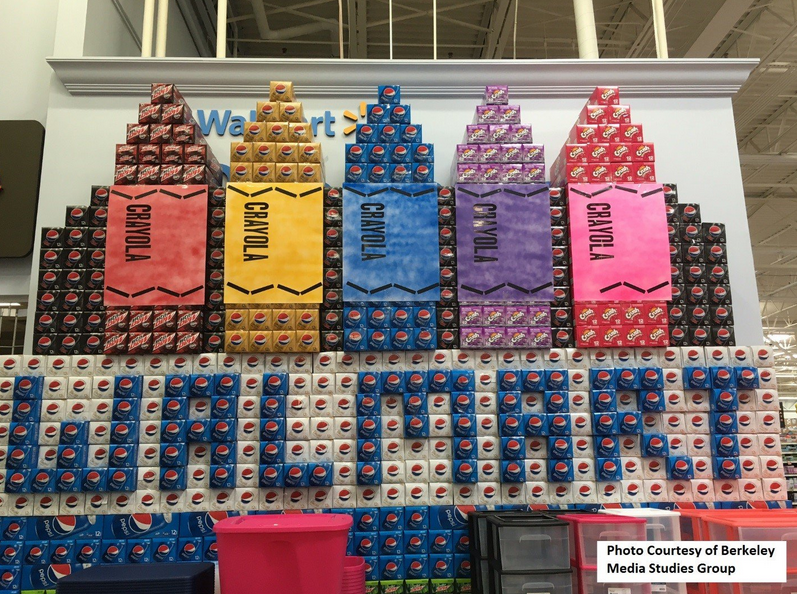
Over-the-top Pepsi retail display targets young students
Check out this shameful back-to-school promotion from Pepsi and WalMart, spotted in Columbia, Missouri.
Big Food markets to kids using tobacco industry playbook
Using a tactic borrowed from Big Tobacco, food companies today aggressively market to children and teens, often using cartoons and other characters reminiscent of Joe Camel. Both industries have also denied marketing to young people and used personal responsibility rhetoric to shift blame for their products’ health consequences onto consumers.
To see more graphics and learn more about the parallels between Big Food and Big Tobacco, visit http://www.cspinet.org/bigtobaccoORbigfood.html.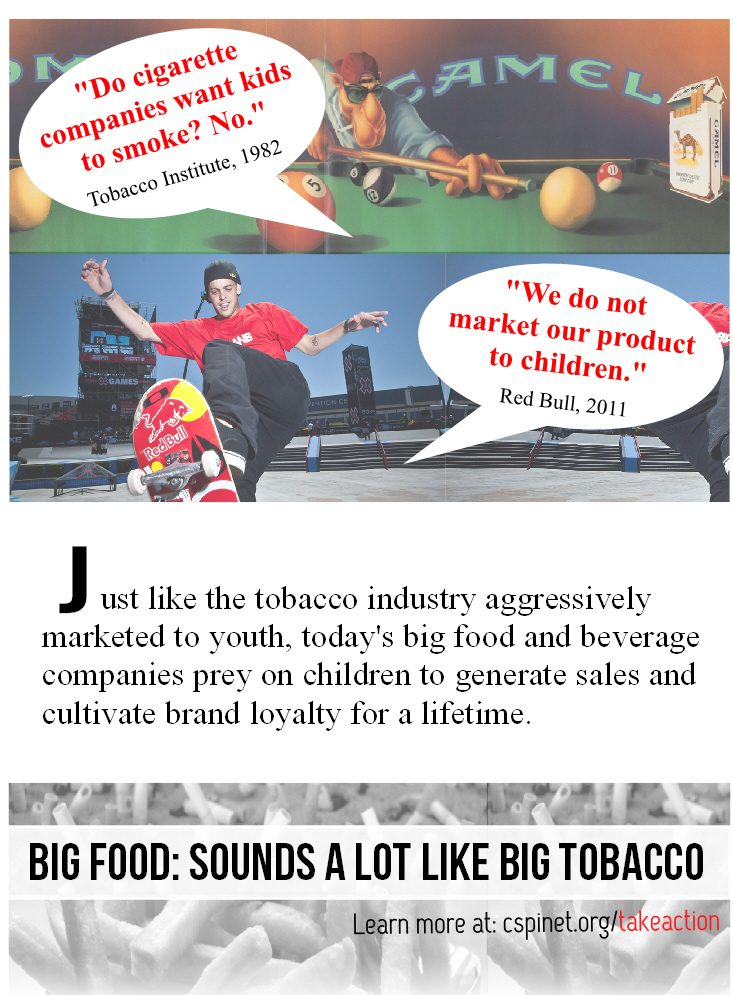
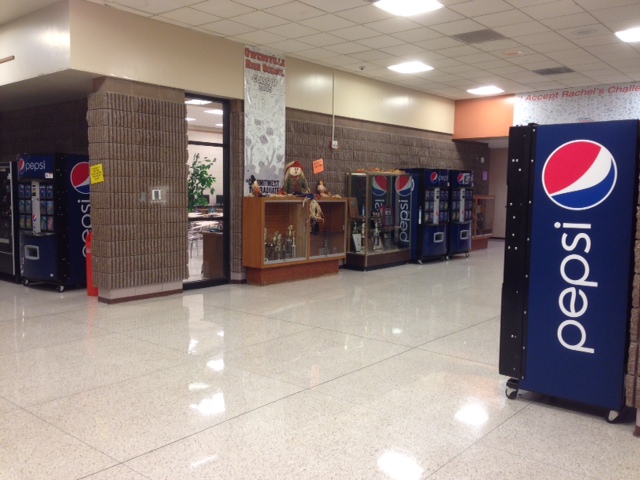
Pepsi saturates rural school with branding
Just off the cafeteria and flanking a hallway leading to this rural Missouri school’s classrooms stand four Pepsi vending machines, containing both diet and full-calorie sugary drinks. Two other machines are out of frame, along with other marketing aimed at students. This egregious display of branding runs counter to expert recommendations on responsible food marketing to children.
Cap’N Crunch’s Oops! All Berries is anything but
While the Quaker Oats Company promotes Cap’N Crunch’s Oops! All Berries as being all berries, it’s quite the opposite. One serving has 15 grams of sugar — the same amount in three Oreo cookies. And it contains three times as many food dyes as Froot Loops. Instead of calling it “All Berries,” the more accurate name would be “No Berries.”
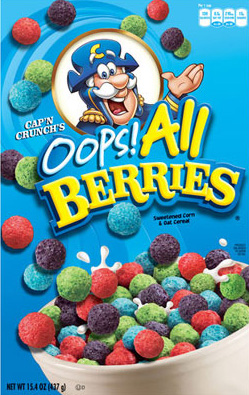 Please use one of our model social media posts to urge Quaker Oats to reformulate this cereal to cut the sugars, drop the artificial dyes, and add actual fruit!
Model Facebook Post:
Quaker Oats’ Cap’N Crunch’s Oops! All Berries is far from a nutritious breakfast. Each serving contains as much sugar as three Oreo cookies, three times as many food dyes as Froot Loops — and no berries. Quaker Oats should reformulate this cereal to cut the sugar, drop the dyes, and add actual fruit!
Model Tweet:
.@RealCapnCrunch Oops! All Berries cereal should be called mostly sugar & food dyes. There are NO berries. @Quaker: you can do better!
KFC ousts veggies from the dinner table
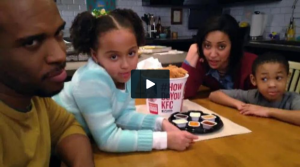
In an ad targeted at the parents of picky eaters, KFC claims that its new Dip’Ems chicken tenders are the key to getting kids to sit still and eat their dinner. The ad, which features a mom who says she “cannot get her kids to eat anything,” shows a family of four gathered around the table with a large (20-piece) bucket of the chicken tenders, an abundance of dipping sauce, and not a vegetable or side dish in sight. KFC should be promoting balanced meals, not foods high in sodium and calories.
Kellogg uses Olympics tie-in to make Pop-Tarts seem less junky
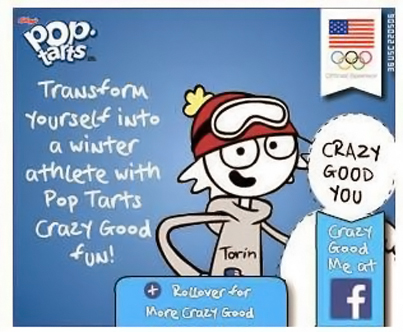
With a new Olympic-themed marketing campaign, Kellogg is trying to bolster its image by associating its products with elite athletes. Here’s Kellogg saying that eating Pop-Tarts will transform you into an Olympian. How many athletes do you think eat junk food before their one chance at Olympic gold?
Coca-Cola targets kids, aspiring athletes in Super Bowl ad
Food companies shouldn’t be marketing their unhealthy products by associating them with physical activity and athletic performance. But that’s exactly what Coca-Cola did when it launched a TV ad during the Super Bowl that showed a young boy chasing his dream of becoming a professional football player — and then being rewarded with a full-calorie Coke after scoring a touchdown.
It’s great that Coca-Cola is no longer selling Coke in schools, but it’s time to stop all marketing to kids, including featuring kids in ads like this one: